
PP138
Real Estate Below Peak Prices Isn’t Always a Good Deal
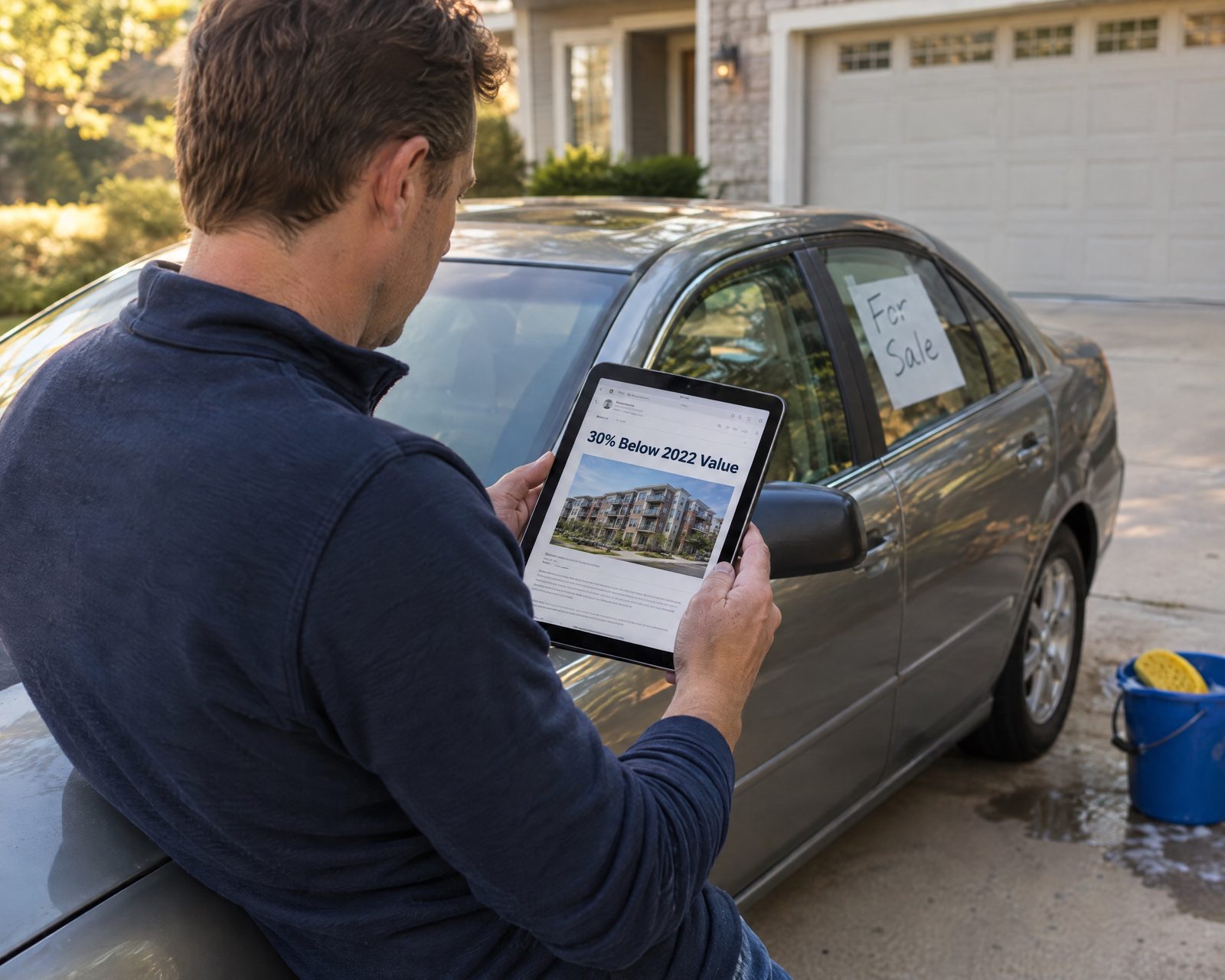
For as long as I can remember, my dad has flipped several cars a year.
He looks for vehicles that might need some cleaning up but are otherwise in solid mechanical condition, often from a seller who’s looking to sell quickly. He knows his “buy box” well.
Between doing this for so long and a career in retail banking, he’s always been able to dial in what a car would sell for – in other words, what it’s really worth. But the number that matters far more is what he pays for it. I heard it plenty of times growing up: you make your money when you buy.
That runs counter to how a lot of investors think. They’ll focus on the highest price they could possibly sell for, and put their effort into all the ways to increase that number. But they completely miss the fact that the purchase price is almost always the more important number.
Over the last year, I’ve seen a lot of sponsors send new deals to their LP lists talking up their purchase price as a big discount to what the property was worth in 2021 or 2022. But we don’t live in that environment anymore – and what a property was worth back then is mostly irrelevant to what it’s worth now.
To a newer LP, that “discount” can look like a screaming deal, which is exactly the reason some sponsors market this way. Maybe it is…maybe not.
The only values that matter are what the property is worth today, and what you’re paying to buy it.
Abnormally low rates inflated prices
The 2022-era price can mean a few different things. Sometimes it’s what the property actually sold for back then. Other times it’s an appraisal from a refinance, or just a theoretical value.
Whichever it is, it was set when interest rates were abnormally low. The Fed held rates near zero from early 2020 until March 2022, and an influx of apartment investors bid prices up to levels that only worked with cheap debt.
And basically no one thought that cheap debt would go away.
During that time, I sat in a lot of rooms full of real estate investors and syndicators where well-known personalities with big platforms stood on stage and explained why the Fed couldn’t raise rates. One self-styled “financial strategy expert” argued it would be physically impossible for the Fed to do it without completely crippling the economy.
The Fed then raised rates from near zero to over 5% in less than a year and a half. A truly unprecedented amount and pace.
So when I see sponsors marketing a property as “30% below its 2022 value,” I think about it the other way around: what if 2022 prices were 40% higher than they should have been?
Are prices still falling?
Any time something is pitched as a big discount to what it used to be worth, I ask the same question: is this catching a falling knife?
In other words, is there still room for the price to keep falling?
Even in markets that have “recovered,” a specific property can still have further to fall (say, it’s in a submarket still absorbing a wave of new construction, or its rents were pushed well past what the neighborhood supports).
Something being cheaper than it was before doesn’t automatically make it a good deal.
Measure against today’s value
You may not be able to formally appraise the building yourself as an LP, but you can ask the sponsor two questions that help show if today’s price makes sense:
- Is the acquisition price based on in-place or pro forma NOI? In-place NOI (net operating income) is what the property earns today. Pro forma NOI is what the sponsor projects it will earn once the business plan is done. If the price only works on the pro forma, you’re paying today for income the property isn’t earning yet (and have eliminated any value-add).
- How does the going-in cap rate compare to the market cap rate? If the going-in cap rate is well below the market cap rate, you’re paying more than the building’s current income supports.
You still make your money when you buy
My dad’s rule for cars holds for real estate too – and it applies to you as a passive investor just as much as it does to the sponsor buying the property.
If you’re investing in a deal with too high of an acquisition price, you’re taking on a lot of risk – at some point, it’s impossible for a sponsor to add enough value to earn their way out of overpaying.
Found this valuable? Join hundreds of sophisticated investors and receive these insights direct to your inbox every week.