
PP133
What to Know Before Investing Through a Fund-of-Funds or SPV
A few weeks ago, I mentioned a fund-of-funds manager who described his last few years to me:
He had raised money from individual investors for over a dozen multifamily deals, and now more than half of them were partial or total losses of investor capital.
🤯
It’s still a little hard for me to comprehend. How does someone whose full-time job is placing investor capital end up with a portfolio like that?
Unfortunately, this isn’t exactly a one-off case. The fund-of-funds space has grown fast over the last several years, accelerated by the “irrational exuberance” of the final years of ZIRP. Plenty of LPs lost plenty of money in deals where they trusted a person who was good at raising capital, not realizing that that person was also a terrible investor.
Many “fund managers” left the business after experiencing a string of losses, but a new crop are emerging as real estate markets have started to thaw. And while there’s nothing inherently wrong with investing in a fund-of-funds structure, it’s vitally important to know whether the person promoting the deal actually understands it, as crazy as that might sound.
From true funds to single deals
A fund-of-funds manager raises money from individual investors, pools it, and invests it as an LP in someone else’s deal.
The original idea was that someone would raise money around an investment thesis (”B-class multifamily in tertiary markets in the southeast”), and then direct what they raised into multiple LP positions with operators offering deals that fit the thesis. So investors invest in the Acme Multifamily Fund, which itself invests in 5-6 deals (hence fund-of-funds).
But in more recent years, the space has mostly turned into capital raisers creating special purpose vehicles (SPVs) to invest in single deals.
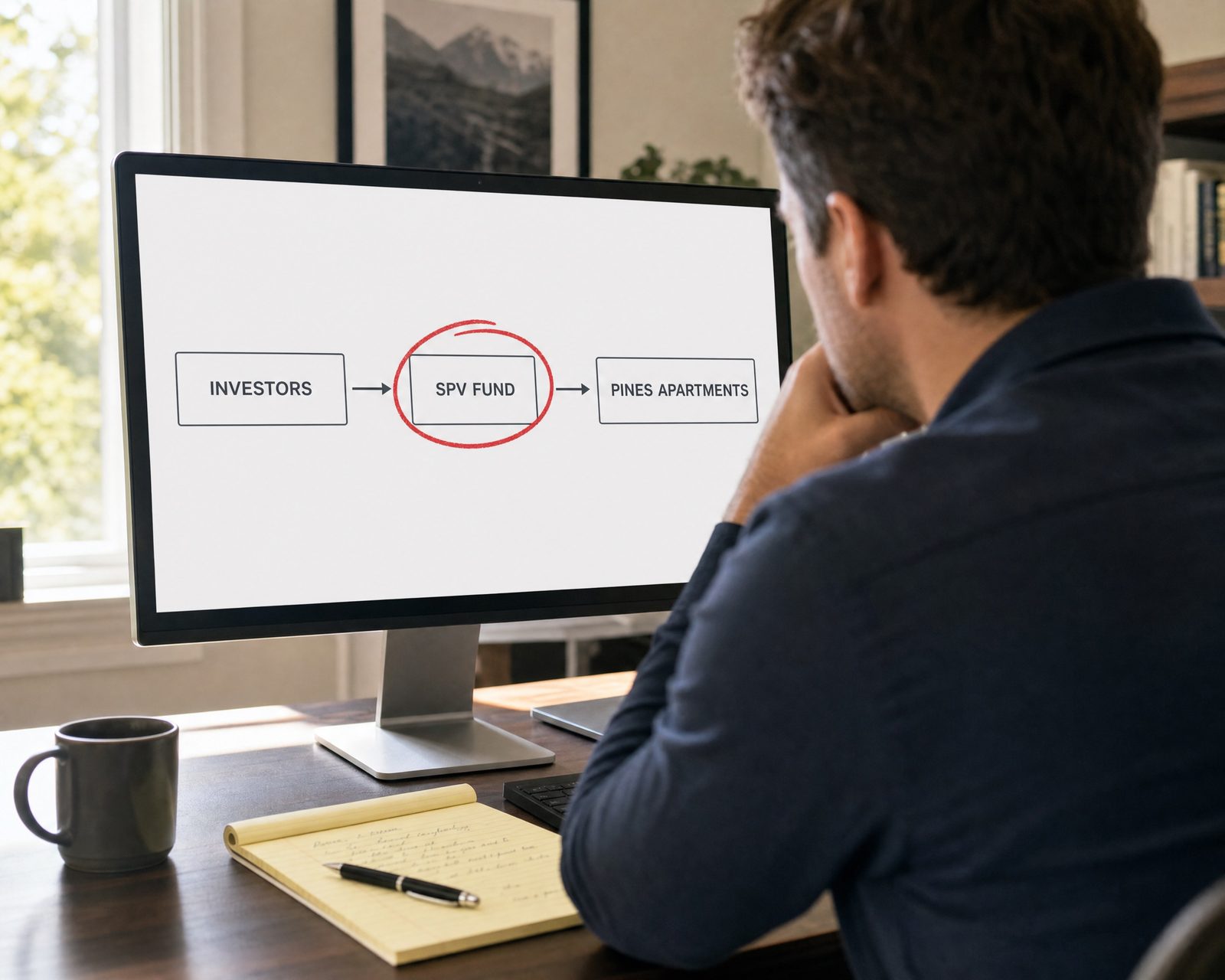
Example: the operator of a multifamily deal is raising money for their newest acquisition (call it “The Pines”). A fund manager creates an SPV (called something like “Acme Pines Multifamily”), markets it to their list of investors, raises $1M from 10 people, and writes a single check to the operator.
So the flow of money looks like: investor → Acme Pines Multifamily → The Pines
The fund manager is a middleman, but is theoretically adding value on both sides:
- To the operator by bringing a single large check
- To their investors by providing access to more deals.
And as such, they are compensated for their services – they usually receive preferred investment terms from the operator (which they split with their investors, earning on the spread), and they often charge fees to their investors on top.
Good at raising, bad at investing
The model has an obvious weak point: it only works if the person in the middle can actually evaluate deals (i.e., make good investment decisions).
Many can’t. The fund manager role naturally rewards those who are good at building an audience and earning trust – real skills, but skills that have nothing to do with understanding and underwriting investment opportunities.
Plenty of fund managers have never operated a property or even built a financial model. And last cycle, that’s part of how so much money landed in deals whose problems were sitting in plain sight…the person placing capital had no idea what to actually look for.
I’ve spent plenty of time in rooms full of fund managers, and a surprising number couldn’t walk you through the basic assumptions behind the deal they were raising for right then.
The fund managers who do this well treat every placement like their own acquisition. They underwrite it themselves, know the assumptions cold, and stay close to the deal after closing – because they know they’re responsible for that money the moment they take it.
The structure isn’t the problem
As I said at the start, there’s nothing inherently wrong with investing in a fund-of-funds or SPV.
Done well, the structure can improve your terms: a manager aggregating one large check can negotiate better economics with the operator than any individual investor walking in alone, and can pass part of that benefit through.
But the structure only works when the person in the middle views themselves as a steward of your capital instead of a conduit.
So before you invest in a fund-of-funds or SPV, get the manager talking about the deal itself, and ask questions to gauge their understanding of it.
You’ll know pretty quickly whether you’re hearing real assumptions and trade-offs – or a pure sales pitch.
Found this valuable? Join hundreds of sophisticated investors and receive these insights direct to your inbox every week.