
PP142
Should You Invest With a Sponsor Who’s Lost Investor Money?
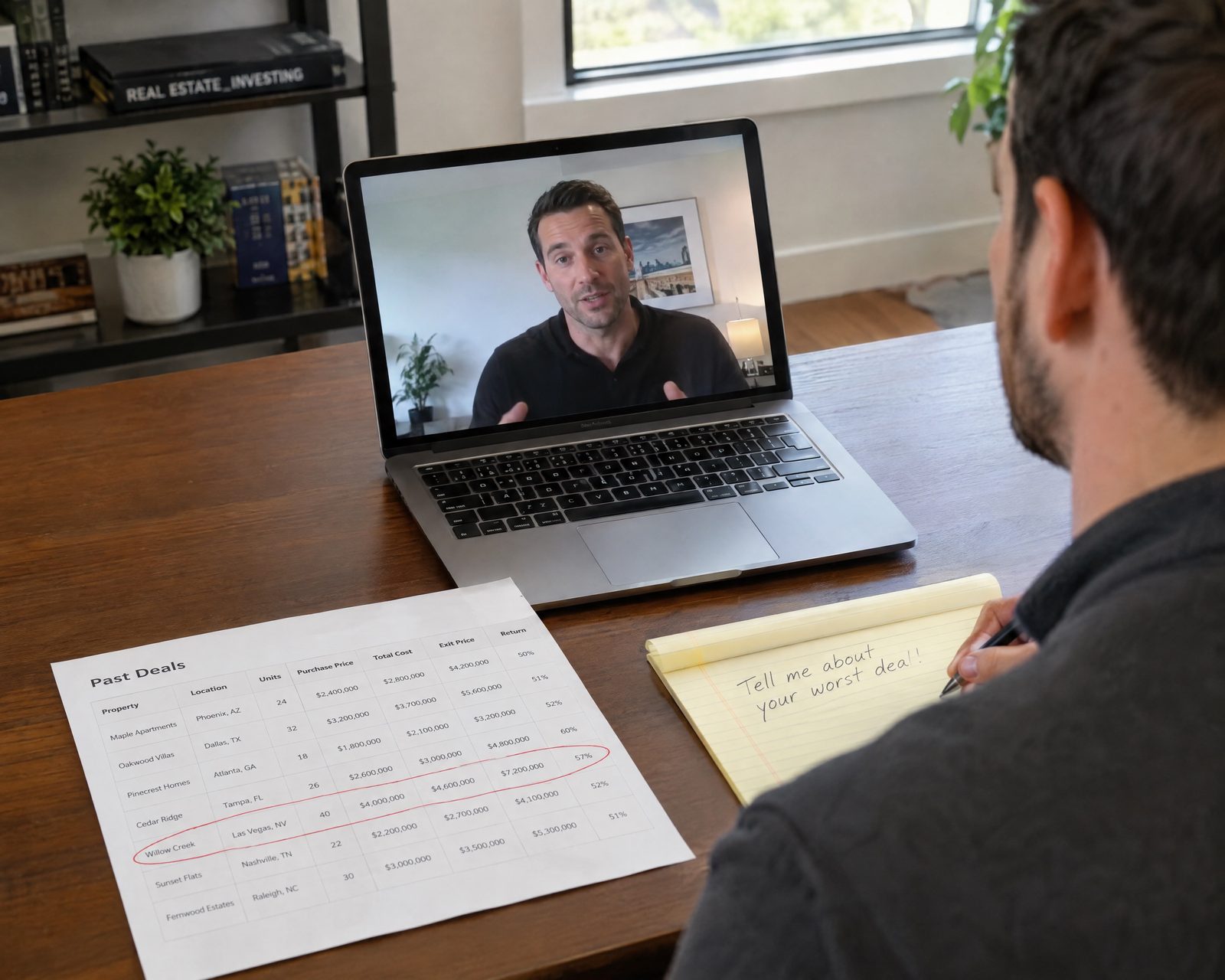
A couple weeks back, Adam told a story on our podcast about a mentor who was a very experienced LP.
If he was considering investing with a new sponsor, one of the questions he’d ask was: “Tell me about the time you lost money.” If the answer was “I haven’t,” his reply was simple:
“Call me back when you have…and maybe I’ll invest.”
Our guest on that podcast episode had a take that was even more blunt, saying they would have told that investor to run, as it showed the sponsor was inexperienced: “You’re just too new if you haven’t lost money.”
I find this opinion super interesting. Because if you spend any time around real estate investors online, you’ll hear the exact opposite rule, always said with a touch of righteous indignation: never invest with anyone who’s lost a dime of investor money.
So which one is right? The logic behind the “never lost money” view is easy to see, but I think paints things with too broad of a brush. On the flip side, I know several syndicators who would fail the mentor’s test – they’ve been in the business for about 15 years and have never lost LP capital. They’re very, very good at what they do, and I’d invest with them in a heartbeat.
Both rules treat a yes or no on “have you lost money?” as the verdict. But what you actually need to know is how a sponsor acts when a deal goes wrong…and a simple yes or no can’t tell you that.
If a sponsor has lost money, look at what happened next
I’ve never thought a prior loss should automatically disqualify a GP. Every PPM you’ll ever read warns that you could lose your entire investment, and expecting people in the business of investing to always bat a thousand just doesn’t seem realistic to me.
So when a sponsor tells you they’ve lost money before, ask for more detail instead of just writing them off: what happened, what they learned, and what they’ve changed since.
Of those three, the last one tells you the most – whether they’re still making the same kind of decisions or bets that cost their investors money last time.
If they’ve never lost money, look at how long and through what kind of markets
“Never lost money” and “never had a deal go wrong” are two different claims.
A deal that “went bad” doesn’t mean that they lost all the money. Distributions can come in well under projections, or a business plan can run well behind schedule, and investors can still get all of their capital back in the end. It’s hard to find anyone with decades in this business who’s never had a single deal underperform.
So with a sponsor who’s never lost investor capital, look at how long the record runs.
At this point, fifteen years without a loss covers COVID and the 2022–24 rate run-up, which hit a lot of operators hard. Getting through that stretch without losing LP capital says a lot about how a sponsor buys and finances their deals.
A sponsor with a handful of deals and only a few years in the business has a much shorter record to judge. Their clean record might mean nothing has tested them yet – their inexperience is the real signal, not a yes/no to whether they’ve lost investor capital.
Ask every sponsor about their worst deal
Whether a sponsor has lost money or not, they’ve at least had some deals perform relatively worse (though maybe not “bad”) than others. Ask them “tell me about your worst deal” and see what type of picture they paint.
For a sponsor who’s never lost money, ask which deal came the closest, and what they did to keep it from becoming a loss.
The answer to worry about is the one with no story behind it. If a sponsor can’t point to a deal that got tough, you have no way to know what they’ll do if (when?) one does.
And once you’ve heard the story, you can check it. A sponsor’s current investors can likely tell you what they actually did (here’s how to have that conversation).
You’re investing in the sponsor’s judgment
In Adam’s story, the mentor ended the conversation as soon as a sponsor said they’d never lost money. I’d have kept it going and asked about the deal that came closest to losing money.
Because any time you invest as an LP, you’re completely dependent on the sound judgment of the sponsor. Once your money is in a deal, you don’t get a say in what happens if it runs into trouble.
The sponsor makes those calls. And their worst deal, whether they lost money on it or not, is your best chance to see what those calls might actually look like.
Found this valuable? Join hundreds of sophisticated investors and receive these insights direct to your inbox every week.