PP123
Syndication Fees Aren’t the Problem. This Is.
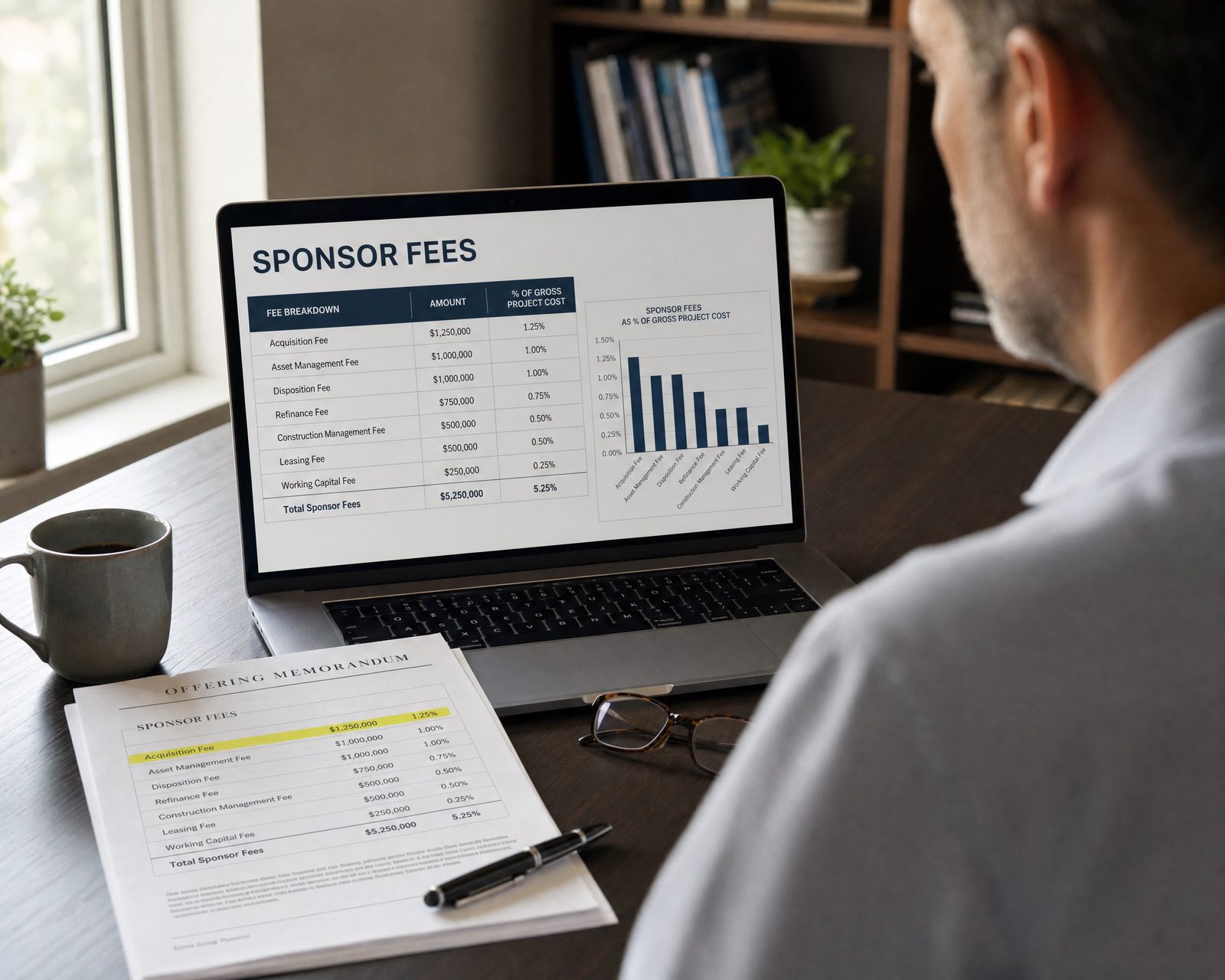
One of the more insidious parts of all investing is the fees.
Rarely do you ever have to cut a check to pay a fee. There’s no direct invoice or bank account outflow. In syndications specifically, fees usually come out of the deal’s economics before any money splits, so it only ever shows up as a smaller distribution hitting your account. You don’t feel it the way you’d feel a “real” bill.
And too often, a cost you don’t feel is a cost you completely ignore.
But you can’t afford to ignore fees.
They can quietly bleed your returns, or be large enough that the sponsor makes out handsomely even if the deal goes south. And even though you can’t feel fees, they’re not hidden – you just have to know what to look for.
A fee is a sponsor getting paid for real work
I know this might sound a bit self-serving, but I’m not against deal sponsors charging fees.
The work is real, and I think it’s fair to compensate someone for their time. After all, the sponsor is providing a service.
As a passive investor, you didn’t spend months underwriting dozens of deals just to find the right one with the right risk/return profile. You didn’t have to build relationships with brokers, lenders, or property managers. You don’t have to personally guarantee a loan.
And after the deal closes, you’re not on weekly calls with a contractor or property manager, ensuring the business plan is being executed correctly. You don’t have to prepare reports, or sort out correctly-calculated waterfalls and distributions for dozens of investors.
Deal fees are what you pay for the privilege of being completely hands off – you’re paying the sponsor to do this work for you.
Where alignment actually breaks
The existence of fees was never the problem.
The breakdown happens when fees are sized so heavy, or stacked so far up front, that the sponsor is made whole no matter how the deal turns out.
Run the test on any deal in front of you: if the business plan falls apart and you lose capital, does the sponsor still walk away well-paid?
If they collected enough on the way in that the outcome barely touches them, their interests and yours were misaligned from the very beginning – you carry the downside alone while they’ve already banked their win and are on to the next fee-generating deal.
That’s not fraud. Nobody lied to you. It’s a structure pointed the wrong direction, and once the incentives are off, you’re on your own.
What proportionate, aligned comp looks like
Contrary to some “LP-whisperer” gurus, aligned does not mean the sponsor gets $0 until you have your whole investment back. That shouldn’t be the goal, and I’d argue that it creates more misalignment – a sponsor who can’t get paid for years has every reason to go chase a deal that does pay.
A reasonable fee structure has three elements:
- Fees that match the work performed, not padded past it.
- A promote (the GP’s share of the upside) weighted to the back end, so the sponsor’s biggest check is the last one cut – after yours is in hand.
- Real GP capital in the deal beside yours, so a loss costs them too.
An even stronger sign of alignment: a sponsor who takes a front-end fee (like an acquisition fee) and leaves it in the deal, at risk. Instead of pocketing the cash at closing, they only receive that fee when you get your money back.
That’s rarer, and is going above and beyond – but it tells you exactly where their head is.
Same fee, opposite deals
A fee that should worry you and one that shouldn’t often look identical on the page – same number, same line item, same spot in the deal. Apart from something absolutely egregious (no, I’m not investing in a deal with a 20% acquisition fee), you can’t tell good from bad just by the number itself.
What separates them is everything the number doesn’t show you. One sponsor earned theirs doing work you’ll never see, kept it in proportion, and put their own money in beside yours – they do well only when you do.
The other front-loaded enough to come out fine whether you do or not…and whatever happens with the deal is your problem, not theirs.
Found this valuable? Join hundreds of sophisticated investors and receive these insights direct to your inbox every week.