
PP144
Is Tax-Loss Harvesting Really a Tax Benefit?
Any time I end up talking with someone who’s convinced the stock market is the best place to invest, I can usually predict where the conversation goes.
At some point, the topic of taxes will come up, and I’ll mention that real estate comes with tax benefits that stocks just don’t have. The response is almost always some variation of:
“What about tax-loss harvesting?”
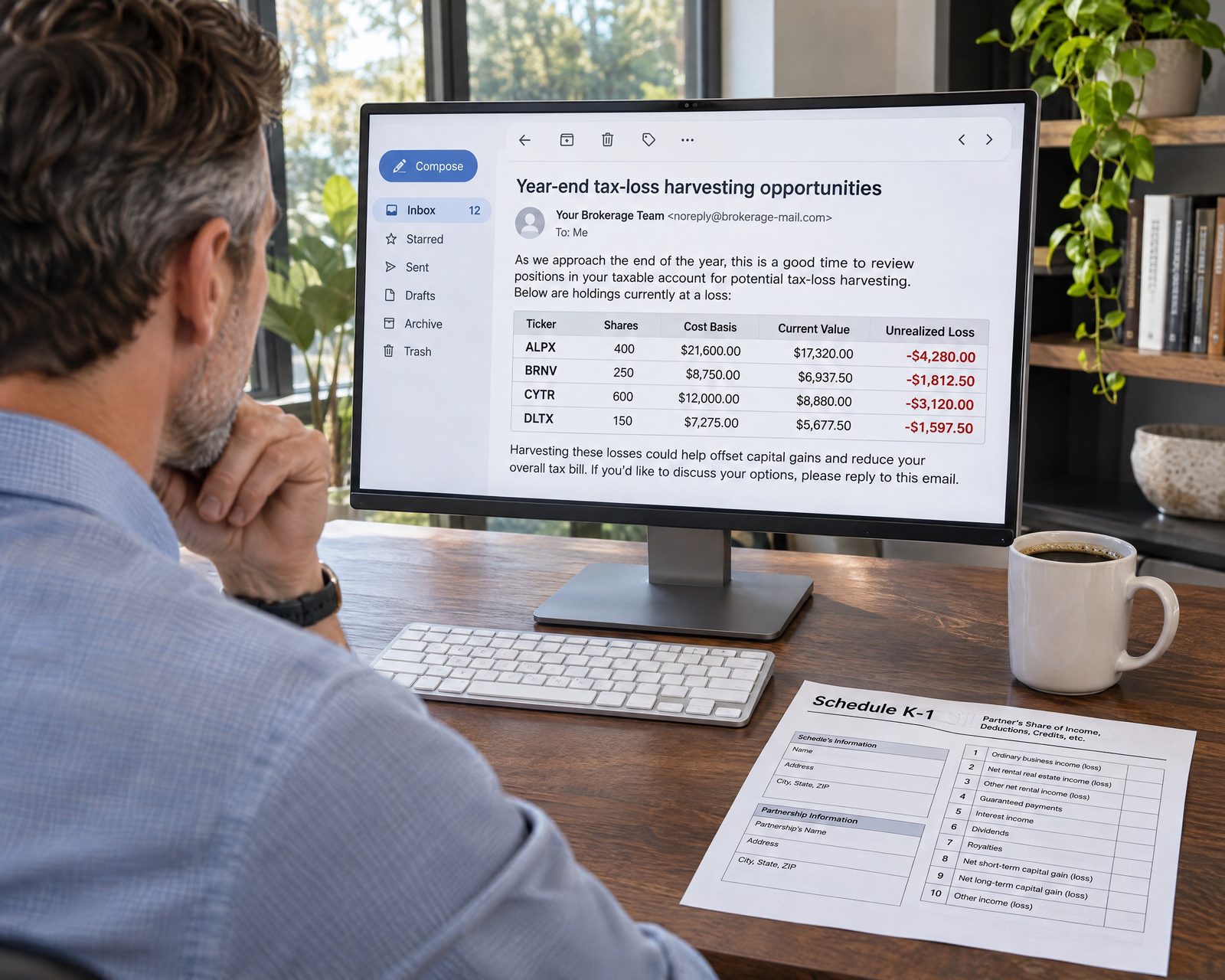
It comes up even more this time of year. November and December are prime tax-planning season, and I’ve even gotten emails from Fidelity encouraging me to look through my accounts for anything that might make sense to “tax-loss harvest” before year-end.
But when you understand what tax-loss harvesting really is, you’ll see that the stock market’s favorite tax “benefit” really isn’t one at all.
Tax-loss harvesting means you lost money
The idea is simple. If you own stocks or ETFs in a taxable brokerage account, you can sell some that are down on the year, and use those realized losses to offset the capital gains on any you sold for a profit.
But don’t gloss over what I just said. Every dollar you “harvest” is a dollar you actually lost. Your account balance went down. You lost money, full stop.
So when someone holds up tax-loss harvesting as proof that stocks are tax-efficient, what they’re really describing is a way to soften the blow after an investment went the wrong way.
The tax break is more of a consolation prize than a true benefit.
In the stock market, it’s about the only tool you have
Part of the reason it gets so much attention is that stock investors don’t have many other options.
In a taxable brokerage account, there’s no deduction for simply owning a stock. You owe tax when you sell it for a gain, and short of giving shares away, the main way to shrink that bill is to sell something that lost money as an offset.
In a strong market (as we’ve had most of this year until the last couple of weeks), that can create an odd problem: there aren’t enough losers to go around.
The Wall Street Journal covered this over the summer, in a piece calling a new kind of tax-loss harvesting “the hottest trade on Wall Street.” As the article put it: “Wealthy investors are now obsessed with losing, too.”
According to the article, the older strategies that sell the losers inside an index aren’t finding as many losses as they used to. So advisers are turning to strategies that use leverage to “turn up more losses” for their clients. Over $150 billion has flowed into them, with fees as high as 1.5% to 3% a year.
(Adam and I covered this article and its crazy premise in a podcast episode not long after it came out.)
In real assets, the tax savings come while you’re making money
In real estate, the biggest tax benefit is depreciation. The IRS lets you deduct the wear and tear on a building over time (a big chunk of it can often be taken in the first year), even while that building is collecting rent and producing positive cash flow.
That’s why you can get a distribution from a deal, see the cash hit your bank account, and still receive a K-1 showing a paper loss that shelters that cash from taxes.
Nothing lost money. The deal did exactly what it was supposed to do, and you still got a tax deduction.
Other real assets are similar. In oil and gas, most of the cost of drilling a well (the intangible drilling costs) can be deducted up front, on a well that’s drilled to produce oil (and cash flow) for years.
The tax benefits are really one of the biggest separators between real assets and stocks – you can get a tax deduction for owning something that’s actively paying you, without having to lose a dime to get it.
Real tax efficiency shouldn’t require losing money
So the next time someone brings up tax-loss harvesting as proof that stocks are tax-efficient, ask them how much money they had to lose to get that benefit.
And when your brokerage emails you about harvesting before year-end, keep in mind that it’s asking you to go find the investments that lost you money this year. Real assets give you a way to cut your tax bill in the years your investments are doing well.
(As always, I’m not a CPA, and I’m certainly not your CPA. How any of this applies to you depends on your full tax picture, so always consult your tax advisor.)
Found this valuable? Join hundreds of sophisticated investors and receive these insights direct to your inbox every week.