
PP141
When to Sell an Investment and How Fast to Reinvest the Cash
On a Friday night in October 2020, the last night of a family vacation in Hilton Head, my manager texted me as I walked out to dinner:
“You probably should check Slack.”
I was part of the cybersecurity team at Segment, a marketing analytics startup, so naturally I assumed the worst: a security incident.
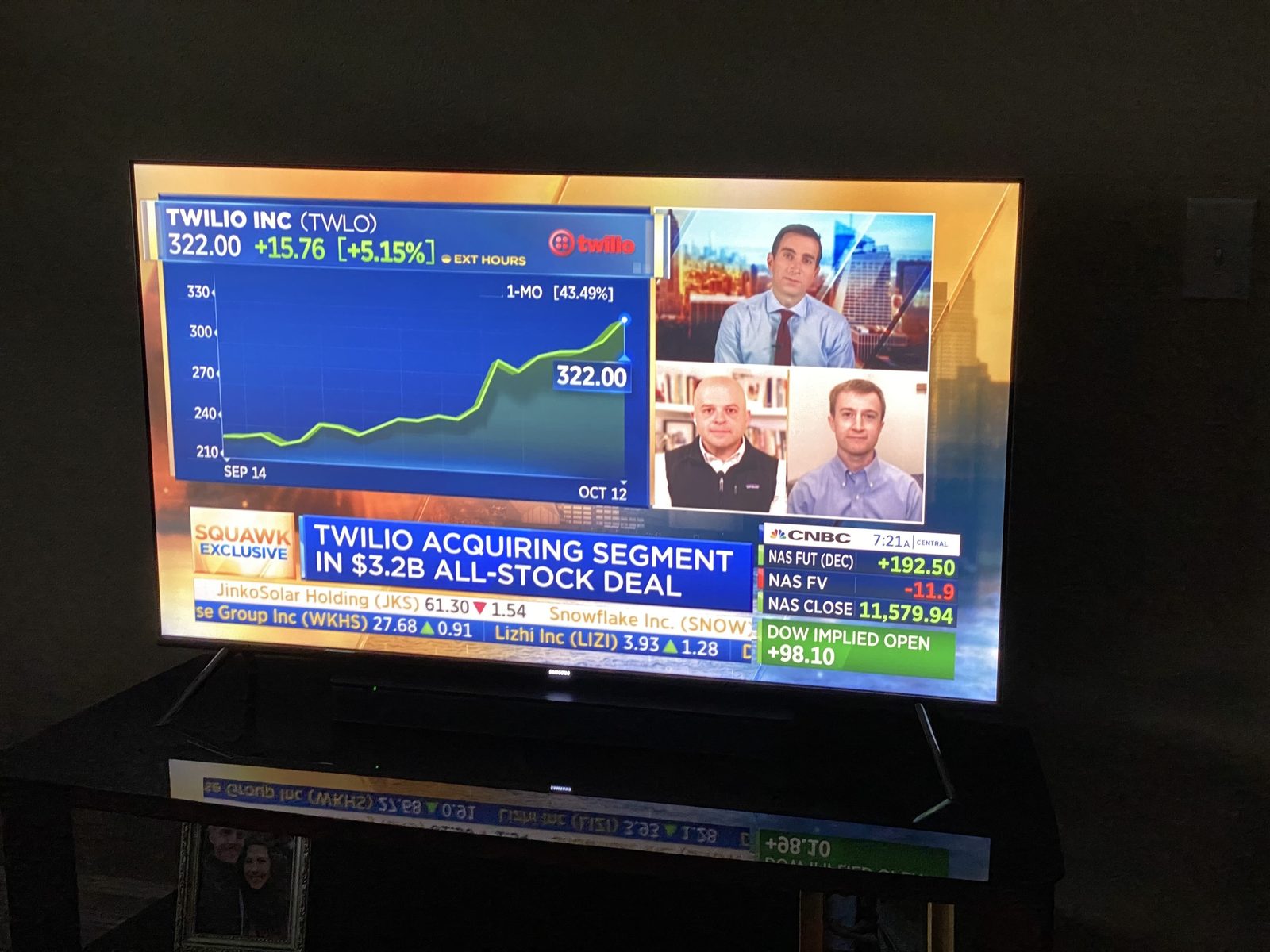
To my surprise, it was a Forbes article breaking news that Twilio was buying Segment. Three days later, the $3.2 billion deal was officially announced, and I snapped a somewhat surreal picture of our CEO being interviewed by Andrew Ross Sorkin on CNBC. Less than a month later, the deal closed.
Prior to the acquisition, we’d jokingly called our stock options “funny money” – they had a value on paper, but there was no liquidity, so any “value” was mostly hypothetical.
But when the deal closed, that funny money quite quickly became real money. Twilio was/is a large public tech company, and instead of our stock options vesting each month onto paper, it was finally possible to turn them into cash.
And like anyone with public company stock vesting, I now had to decide when to sell it and what to do with the cash.
I sold every batch as soon as it vested
By late 2020, I already knew I wasn’t going to stay in tech forever. I’ve had entrepreneurial dreams since I was in middle school, and the real estate bug had bitten hard. But it can take a long time to make decent money as a full-time real estate investor, so in the short term, I needed cash to live on and to build the business.
So my rule was simple: every time a batch of options vested, I sold it the first moment I could, whatever the price.
My coworkers thought I was crazy. Tech stocks were soaring in 2021, our stock was trading in the high $300s, and analysts were projecting it could double from there.
“Are you selling them all? Don’t you think it’s going to keep going higher?”
I’d tell them I hoped so, but I wasn’t going to bet on it.
That didn’t stop me from second-guessing it. I’d constantly open the spreadsheet I used to track everything and run the numbers: if I hold everything for another year and it hits $800, how much am I leaving on the table?
The numbers were always eye-popping. Yet every one of those sessions ended the same way: that wasn’t the plan. No facts had changed since I made my rule, so I kept selling.
Lucky timing
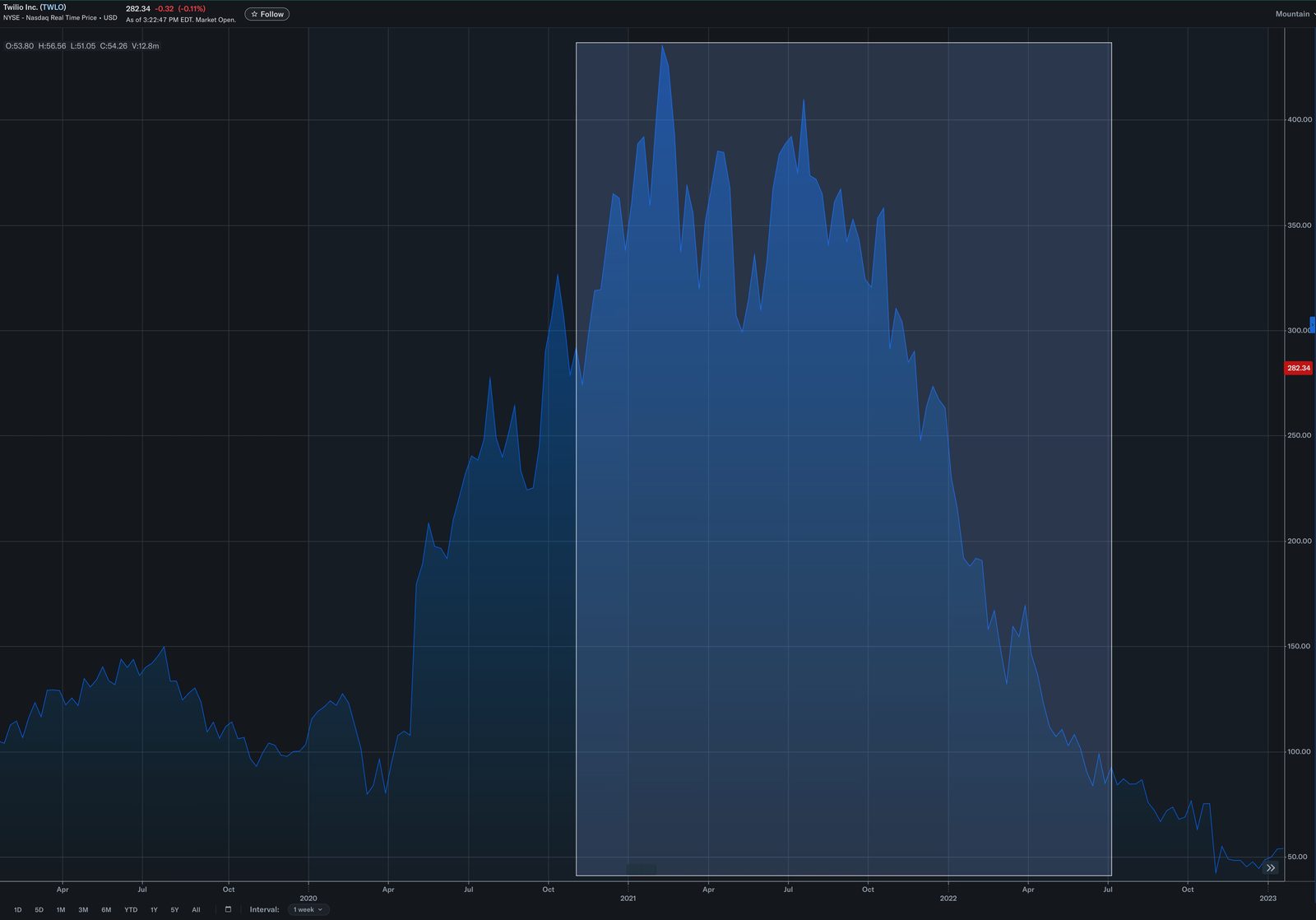
Take a look at the chart above of Twilio’s stock price from January 2019 to January 2023.
The shaded area is the stretch when I was selling. The stock peaked at $443 in February 2021, and by the time I left in July 2022, it had fallen under $100 and my options were perilously close to being underwater.
With hindsight, it makes me look like a genius, selling when the stock was trading at a ridiculous valuation it never had a chance of living up to.
But there was no timing involved. All I did was follow my plan…I sold whenever a batch vested, and the fact that it worked out so well was mostly dumb luck**.**
Plan when you’ll sell, and how fast you’ll invest
I share this story because, looking back, I think there are some investing lessons in it.
First is the decision of when to sell. Especially if you have stock-based compensation, it’s easy to run the “what-ifs” twelve ways to Sunday. I’m not saying that turning it all to cash ASAP is the right decision for everyone in all situations – what matters is that you evaluate your needs, goals, and desires, then make a selling plan and stick with it as long as the facts remain unchanged.
How fast you invest the cash is the second. Because once the stock is sold, there’s often pressure to deploy it all immediately, especially if you’re trying to build significant passive income.
Last year on our podcast, Bob Fraser introduced a “rule” that I love: if you have $1 million to deploy, it should take about three years. If you put all of it into this year’s deals, you won’t have anything left for the best ones that cross your desk next year.
In practice, that might look like three deals this year, three more next year, and the rest sitting in T-Bills while you wait. Many investors flinch at that cash drag, but it’s still far better than putting it into a mediocre deal just because the cash was burning a hole in your pocket.
Make both decisions once, then stick to them
When the funny money became real money, the same decision came back every month – and there was rarely a time that I didn’t have at least some hesitation before clicking the sell button.
What got me to click it anyway was asking myself what had changed. Usually the answer was just the stock price. My long-term goals stayed the same, so I followed my rule and sold.
If you have stock vesting (or a similar situation that involves selling assets for cash), make both decisions once, based on what you need the money for. When you hesitate before selling or investing, ask yourself the same question. If your needs and goals haven’t changed, stick with your plan.
Found this valuable? Join hundreds of sophisticated investors and receive these insights direct to your inbox every week.